Tuesday, January 31, 2012

Ennui There Yet


France Road Trip: Part 3

After getting our fill of châteaux, we continued south through beautiful countryside and tiny towns of grey stone buildings, running the gamut of sightseeing from somber WWII sites to cognac tours to catching up with friends. So, prepare for a very long post covering two weeks of driving nearly 700 miles across the Dordogne to the French Riviera. We've included some highlights, advice and memoirs for ourselves. So feel free to read the whole thing, or even better, just skim.


Cognac: Remy Martin Tour


For our Cognac stop, we scoured forums and trip guides to try to decide between the tour offered at the Hennessey factory or the slightly pricier but better reviewed Maison du Remy Martin. Our minds were made up when we saw the the Hennessey factory was closed for winter. We went in knowing next to nothing about cognac, and left intoxicated connoisseurs. We learned that the term "grand champagne" on cognac bottles refers not to the grapes but to the type of soil, which the region shares with the region famous for its bubbly. 

Remy Martin is renowned for its Louis XIV, which ranges from $1400 to $2500 a bottle. Each bottle is hand blown crystal, and no two are the same. The true craftsmanship of Louis XIV isn't that it's exceptionally delicious, rather that it is skillfully blended with different vintages and barrels of spirits to have a consistent flavor. The appeal is that you're enjoying the same flavor that your aristocratic great-great-great grandfather enjoyed a couple centuries ago. Each cognac house has a master taster (maître de chai) that's in charge managing the flavor, and Remy Martin prides themselves on having the first female maître de chai of all the major cognac houses.

We toured the historic cellars, where only Louis XIV production takes place.We were shocked to learn the almost 100 barrels are lost to evaporation during the 40-year aging process; which they call the "angels share" or justification of the price per bottle. They removed the bung on one of the barrels and the liquor smells strongly of Dr. Pepper.

Unfortunately, we weren't allowed to try the Louis XIV, but the guided tasting was very educational and it alone was worth the price of admission. We tried the low-end VSOP with chocolate then with shrimp, and the high end Grand Cru with foie gross mousse with a balsamic reduction. They were a delicious pair, but when trying the foie with the VSOP, it suddenly tasted like peanut butter. Our host was very handsome/charming/fancy and after guiding us through the distillery and tasting, guided us to the gift shop. Bejeweled bottles of Louis XIV were available for up to €12,000 (which included a matching carrying case that converts into a display shelf). Persuaded and loosened up by our tasting, we bought a few small bottles, including clearing out the stock of a very limited single production cognac and buying their maître de chai's new personal blend.

Oradour Sur Glane:

In our road trip research, we came across another French WWII landmark, the French martyr village of Oradour Sur Glane. We knew it would be an upsetting sight, but having forgone opportunities to see concentration camps in Germany, we thought it was a worthwhile and necessary stop to really absorb the atrocities of that time. 


In the days following the Normandy invasion, German troops descended on this small town in Southern France and systematically murdered the entire town in one afternoon. Women and children were taken to the town's church and gunned down, while the men were killed on the streets before the whole town was set on fire. It was a horrible and inexplicable act, with only theories on what brought it about. Some people think it was done by Germans who saw the end coming and wanted one last battle, and other people consider it revenge for a German commander that was killed in the area that week.

After the massacre, the town was never restored or reinhabited, and was left as a permanent memorial to the victims. Everything is still in it's place, and it's an eerie and silent ghost town. Cars are parked in driveways and bikes, beds, and radiators are still in the homes. Plaques on each building tell the name, occupation, and age of each victim. It was a sobering visit, and an interesting juxtaposition to see the new town that sprung up next to the memorial, living life in the present so close to the horrors of the past.

Petit Clos

After Oradour, we were happy to be on our way to see a friendly face. Our friend and old coworker, Cindy Petterson, had moved to a small town in Southern France with her family a couple years ago, and we were excited to see her on our trip. The Pettersons have done a fantastic job of converting an old farmhouse into a beautiful B&B with soon-to-be vacation gites next door. It was amazing to see all the work they've done on the house through "before" and "after" pictures, and how quickly they've made themselves at home in France. In fact, their daughter has become fluent in French and at the top of her class in a French school, all in the short time they've been there. 

Our only surviving non-ring photo from Southern France
Cindy suggested some stops along our drive to her house, so we got to fit in a few more chateaux and quaint towns in Domme, La Roque Gageac and Beynac. Some great smaller towns we would have never found on our own, and a pasture that we chanced upon for a half hour of animal antics. 

We were thrilled to be guinea pig guests and experience their gorgeous rooms, hospitality and delicious food including daube, a good ol' fashion taco night and our favorite, Confit De Canard. Cindy introduced to this specialty. Although it's a super gourmet (and delicious) dish, it actually comes in a can and is easy to cook up for a nice dinner. In fact, we stole her idea and made it for Robin's parents when they visited awhile later.

Unfortunately, Cindy was a bit under the weather when we stayed, but Hank was happy to show us around their expansive grounds to take a look at their forest and vineyard. Hank also provided David's highlight of the whole France trip: watching the 49ers game in the middle of the night on a big-screen TV. The game finished at 5am, but David was a diehard (and sleep-deprived) fan and watched the whole thing, even if it was a bad idea.

We had a great stay with the Pettersons. If anyone is traveling in the region, be sure to check out Petit Clos in St. Jean de Duras. You'll be glad you did!  

One ring to unite us all

As mentioned in the Paris post, we got engaged in early January. David, afraid to travel with a diamond in tow, opted to bring a simple ring as a symbol and then buy the real deal in Europe. Unfortunately, that ring didn't fit, so the hunt to find the perfect ring became a top priority. 

The capitol of the Perigord region — famous for black truffles, foie gras and other gastronomy is the town of Perigeuex, the city from where Robin gets her last name. (More on Perigueux in a later post.) Since she'd be taking David's name when they got married, Perigeuex seemed to be the ideal place to buy the ring.

We got to Perigeuex on a balmy 38ºF morning with a list 5 jewelry stores long. We passed a window of a jewelry manufacturer and we popped in and painstakingly communicated, "We are fiancees. We are to find a [point at finger]. To buy diamond. Fiancees." We eventually got our point across and the hunt began. The jeweler was very friendly and guided us to several stores, helped us with sizing, and gave us some pointers on where to go and what to look for. And as David investigated a vintage diamond ring, our new friend told us that David has the "eye of a jeweler." Who knew?

In Perigeuex we narrowed it down to 5 different rings, but none of them were The One. Our search also took us to the town of Berjerac, of Cyrano fame. We started to embrace the idea of buying a vintage ring, something with a little history to it. Soon, we were driving through every small town looking for Brocante (antiques) or Bijoux Anciens (vintage jewelry) signs, which surprisingly there are a LOT of all over France. (We didn't see nearly as many in any other country). A store in a middle-of-nowhere town had a diamond the size of a dime laughably out of our price range (we did , however, find a great vintage alarm clock there at a much better price - didn't fit on Robin's finger, though). At another store, we accidentally almost placed an order for a custom ring because of our language barrier. And one place advertising brocante turned out to be nothing more than a very sad hoarder in a frighteningly dirty storefront/apartment. Several places would immediately get suspicious and decline us when asked if they had diamond, then they'd size us up and decide they weren't going to get robbed. One shop owner said he had nothing, then locked the door and reached for a small ziploc bag behind a velvet curtain loaded with vintage pre-WWII diamond rings. Our search for a ring gave us a lot opportunities to practice our French and after a few days, we had finally figured out what type of ring we were looking for. 

Marseille


We were ready to start our drive along the southern riviera, 
but hadn't found a ring yet. So, we made a stop to the West to visit Marseille. We didn't plan on seeing the city, but a google search for antique jewelry came up with tons of results. When we pulled into the city, it was jarring. We'd been driving for weeks through towns and hamlets, and it was a dramatic shift to be in the middle of the 3rd largest city in France. We found an AirBnB on the outskirts of the city center and made a determined itinerary of ring-shopping and sight seeing.  The port city is notorious for crime, and every jewelry shop is guarded with either bullet proof glass, remote controlled doors, a security guard and sometimes all three. Shopping in Marseille didn't feel quaint, but by then end of the first day we were sure we'd seen at least one The One. After two days of ring searching, and two nights of soul searching, we finally decided on a ring, which was actually the first ring in the first store we saw.

Aside from small pieces of metal, Marseille has a lot of interesting sights. Saint Mary's church is atop hill overlooking the city and the port and the decorations inside worship ships almost as much as Christ. The city was once the most significant port in Europe and you can still see how impressive it had been. The count of Monte Cristo washed up on the shores of Marseilles, but he surely saw a very different version of the city. 

We alternated between loving and hating Marseilles. On the one hand, there was some beautiful architecture and undiscovered plazas that made it seem like it was underrated by guidebooks.  But on the other, every time our views were looking up, we'd almost step in dog poop or human vomit or garbage and have to start looking down again. Of course, as our loyal and lovely readers now, we left Marseilles on a low note (more here).


Riviera 

To say that the wind was gone from our sails after our Marseilles stop would be an understatement, but we did try to carry on. We drove through Cannes and Monaco in the dark. We had to return our car in Nice, but first we overshot it and drove straight through to Italy for the closest thing to a dose of home we could find. We ordered some pasta and a panino in Santelmo before heading back to face France once again.

Rainy Days in Nice

Nice was not exactly the beach town of its postcards when we arrived in late January. It pretty much poured the entire time we were there, which was fine with us because we were still recovering and not in much of a mood to sightsee. We instead passed the time being American homebodies: shopping at their mall, reading and going to see a movie at the theater in VO (version original). Of course, reading The Lovely Bones and seeing The Girl with the Dragon Tattoo weren't exactly great choices for pick-me-up escapism, but our options were limited. The old town of Nice was quite quaint and we were glad to have another opportunity to see it (more on that later). In fact, in strolling the city center we found about a dozen vintage jewelry shops. A few days to late to avoid our Marseilles stop, but at least we aren't bitter. 

We bid adieu to Nice and headed to our next stop, our second workaway. Stay tuned!

Road Trip Best Times:


• Discovering the radio station, Nostalgi, a mixture of American and French oldies. One of our favorites was actually a medley of different American hits. "It's been a hard day's night….yeah yeah yeah….Gloria!" We definitely found a couple of new wedding song contenders, and realized that radio bumpers in France are perhaps more amusing than the songs.  Take a listen!


• Picking out our wedding palette by pointing at shutter colors and tree bark in Provence.


Friday, January 27, 2012

With France Like This, Who Needs Enemies?

Marseille


Ya, sure, it looks nice.
But it's an awful place

The unthinkable happened. After 3 weeks of a road trip, which you, our readers, know nothing about, our shiny happy fun blog has come to a shrieking hault.


So, in this blog post, we’re going to bitch and complain, air our grievances and jump ahead to modern day. Then go back and chip away at the two-month void in our travel log.

Our electronics have been stolen, along with photos from November through January. With it we lost written blog posts for five major stops on our tour, our tacky souvenir magnets we’ve pain-stakingly hand selected for awful quality and worst of all — our happiness.

Marseille It Ain’t So

We detoured our French road trip south through Marseille in search of bijoux anciens stores, which the city has many of (more on this later).

Driving into the city was an immediate nightmare. A patchwork of one way streets meeting in 5-way intersections, congested shopping boulevards bisected by a cars width lane, and direction signage that guides cars onto sidewalks without warning to pedestrians. Every parking spot in the city is paid parking, even in residential areas. It took us an hour to realize this and we drove a quarter mile on a sidewalk to get to an underground parking lot.

We set off on foot, determined to find the hidden charm of the city that was lost on us in the car. But, walking around proved not much better. We passed by homeless people on almost every corner and actual gypsies on others. With almost every step, we were either dodging dog poo or some other mystery liquid. Or, in one case, a person.
This is a photo of Marseille. 

We were crossing a street in a shopping district as a bald, thuggy looking guy in a puffy down jacket and aviators approached us. He was walking straight toward Robin, and as he got closer, he started to scratch the back of his head, sticking his elbow straight out infront of him like the bow of a ship. Robin took a couple steps aside, but he stayed locked on target and jammed his elbow right into her shoulder, just below her collar bone. We finished crossing, like two ships passing in the night, colliding, then continuing on.

It was startling and seemed like some sort of distraction a pickpocketer might use. Once we crossed the street, we both looked at the man in shock. But just as we turned to continue soaking up Marseilles, the man had somehow re-crossed the street for a confrontation. He was now gaining on us and yelling unintelligible French phrases. We walked quickly up the block with blinders on, followed by the shouting Marseillian till we ducked into a small convenience store, hoping to throw him off our track.

It worked. He was no where to be seen after we left the store, and any charm Marseille had left was gone in our eyes.

And speaking of gone...to complete our 3-day stay in Marseille, we took the advice of a desk-woman at the Tourist office to drive outside the city center along the beach, which was quite beautiful. So we set out east along the coast to begin our a 5 hour route across the whole French Riviera. Unfortunately, we didn’t realize Marseille’s local coastal roads don’t connect to any through roads to the rest of the coast.

We circled, searching our map for any kind of way out, and ended up winding around the same few surburban roundabouts. Our instincts were telling us to power through and get out of the city that had trapped us somehow, but frustration and hunger won and brought us to a quaint seaside parking lot surrounded by restaurants perfect to pop in for a quick bite to eat.

Our lunch was delicious. Eating in France has been a frustrating experience, but ironically we found a great restaurant that was affordable and had a delicious lunch. What made it ironic was at the end of the meal, David declared, “Y’know what? This is the first French meal where I’ve had nothing to complain about.” 


This is probably what it looked like when it happened. But in French.
But, at that moment we would have the most to complain about for our entire trip.

At that moment, our rental car was being expertly broken into a few meters from where we sat; targeted because of its rental license plates (we were told later by the Marseille police department).

On our last day with the car, we lost our “electronics” backpack,our beautiful new SLR, a plastic bag with our ugly magnet collection and the photos from the next 10-or-so blog entries.
We didn’t realize our “emergency” credit cards were buried deep in our document binders. It wasn’t overlooked by the thieves. They spent over $2,000 in the three hours before the fraud department got wind of what what was going on.

For insurance reasons, and being justice-loving Americans, we drove completely deflated and panicked to the Marseille police department, where we gave a report of what happened with no sympathy in return. The officer taking the report bragged to us about his 2-month visit to New York and was not even robbed once. WAY TO GO! He also told us a comforting story about have 4 pairs of shoes stolen from his car on a beach in Itlay.  He showed no interest in investigating our case, declining any information we had about where our car was or physical descriptions of the missing items.

Our beautiful sunset coastal drive turned into a dreary inland night crusade to our seaside splurge hotel to end our road trip. That night, our romantic evening turned into midnight phone calls, cancelling credit cards, changing passwords, alerting authorities and sighing painfully as we remembered other missing items and irreplaceable photos.

We visited the nearest police station the next morning, armed with a list of stores where our stolen credit card had been used, the time of purchase and the purchase amounts with hopes that one would have a surveillance camera to help catch the perp. The local police called the Marseille station and read the list of stores. They responded by asking us to call the stores on our own and ask if they had any information. So, with the help of a friendly hotel receptionist, we called all the stores the next day and 3 stores remembered the person and were prepared to describe them to the police. We called the police back with this new information — not interested.

So, we’re continuing on, like two motherbirds with a nest empty of electronics, taking each other under each other wings, spittting food into each other’s mouths. Pathetic.

In the next weeks, we’re hoping to bring our blog back up to present day, un-soured by our losses. We plan to look online for specific photos to bring the blog to life, or add a couple thousand words in their place. We’ve written a log of our favorite lost photos and might list them for our own memories.

So, moving on...

Saturday, January 14, 2012

Loire in Order: Chateaux Visitors Unit

Road Trip Part 2: Châteaux Country (Blois, Blois, Blois)

After bidding adieu to Normandy and Brittany, we headed south for some castle sightseeing (quickly becoming our primary activity in Europe). We made Blois our homebase for 3 days, but started checking out chateaux out before we even checked in.

For anyone planning a chateaux visit, for each castle we visited we've listed prices and our "value" rating on a four turret scale! What fun! For quite a few, we only saw the outside, either because of time constraints, their opening hours or their pricing, with some costing more than the Louvre. 


Amboise: On our way into Blois, we saw our first chateau, infamous for hanging hundreds of Huguenot rebels from its exterior arches. It looked imposing from across the river, and that was as close as we got, opting for wine tasting in Vouvray instead. 

Chaumont: We didn't realize this chateau was closed by the time we arrived, so we drove up the hill through the city looking for the way in. Instead, David just ended up having a hilltop bathroom break.


Chambord (9.50€; ):
This was our first true stop and our favorite chateau. Even though it was never completed, it's the largest chateau in Europe and it is huge : It has 77 staircases, 282 fireplaces, and 426 rooms. But, when none of the fireplaces are going, it's freezing in January with very few visitors. The castle was originally designed as a hunting lodge in the 1500s and sits in the center of a wooded park. We passed boar crossing signs on drive in, but unfortunately didn't see any animals - except for salamanders adoring the castle. The ferocious symbol of King Francois I.


The castle is made of soft limestone, which made carving very easy. So our visit soon turned into a hunt for the oldest graffiti. It was really fun to see how nice even the aristocratic rebels' and hoodlums' handwriting was back in the 1600 and 1700s. We found one from the 1500s that was sadly followed by one from 2020, which kind of killed our buzz.
The other highlight of the tour was a double helix staircase (designed by Leonardo da Vinci) with two separate staircases spiraling around each other but never meeting. Oh, imagine the delightful photos we took of each other from across the staircase! The stairs led up to a very elaborate rooftop, which has so many towers and chimneys that people compare it to the skyline of a town. 
People used to watch hunts from the roof,  because the hunters forced animals out of the forest to the front of the castle to be killed. 

Cheverny (8.70€; )
This was the only castle we saw where the owners still live (and still owned by the same family!), which meant you could only tour the first two floors and that you saw some awkward current family photos. Although many castles were damaged during the French revolution, the owners were well liked and the castle was not affected.

The architecture and decor, both from the early 1600s, are well preserved and amazing to check out. Our favorite part was 6,000 years older, though: prehistoric antlers, hung at the actual height of the animal (see below, and pretend that's Robin).

Speaking of animals, the most unique aspect of the visit is checking out the hunting dogs, since Cheverny is still a hunting chateau. The dogs are half English foxhound and half French Poitou, and - let's face it - a little scary and aggressively howly. You can watch the feeding (of raw meat) if you get there in time. First we were disappointed we missed it, but after watching and hearing them during what should have been a food coma, we were glad we didn't see the real action.

Of course, the highlight of the visit is imagining you're in a Tintin comic, since this is the inspiration for the Chateau de Moulinsart in the books. Poetically, our only surviving photo from our chateaux hopping is us tintining at the castle (see above). If you want to shell out a bit extra (we didn't) you can see a Tintin exhibit next door, but it's mostly just wooden cutouts of the characters. 


Chenonceau (11€; ♜♜♜♜ without ticket) We were really excited about seeing this chateau after reading about it, but were planning on just looking from the outside since we only had a half hour and didn't want to pay the high admission price for such a short visit. We were disappointed to find out that they charge admission before you can even get within sight of the castle, so we drove away upset. But then we had the bright idea of trying to get a glimpse from another angle (way to go, atlas!) and got the shot to the left. Ok, not that shot because we have no photos anymore, but a shot from that angle.
Best Tip: If you don't need to see the interior of the castle, cross the first bridge east of the castle entrance and make a hairpin right onto a dirt road. Park your car at the trail head and walk along the river for about 10 minutes until you see the castle. In our opinion, the view from the South side of the river seemed even better than the postcard shots we'd seen from the other side. Oh, and did we mention it was free? We like that. 


Château d'Azay-le-Rideau: 
This early Renaissance chateau is built on an island in a river. We arrived just after closing time for this one, too. But, after our good luck with Chenonceau we walked around the lake to sneak a look across a bridge at the back of the castle. The view wasn't like this photo at all — more of a glimpse of a turret through thick trees. But, in our memories it looked just like this!


Blois: Despite Blois being our "home" for a handful of days, we didn't end up with enough time to see more than a drive-by of this castle right in the center of the city. The spiral staircase in this photo is the most famous part of the castle, and our least memorable — for obvious reasons.

Saumur () After our stint in Blois, we spent the night in Saumur before heading down south. And wouldn't you guess, there was another chateau there! This one was much older than the period we'd been seeing (built in the 10th-12th centuries). We had a great time hiking up through the city to reach it. Since it was a less popular chateau, it was closed for the low season, but the grounds and views across the river were beautiful.
Driving South, our atlas was a blessing and a curse, because it actually had a chateau symbol pointing out every one — large or small, famous or not — that we were driving near. The result was a number of small detours to see castles that weren't originally on our list:

Montbrun ("♜" - Brad Pitt): One of our favorite memories from this trip and one of our saddest photo/video losses. We rounded a corner and came face to face with a gorgeous small castle on a frozen lake. David tried skipping stones on it, and when the stones hit the ice they made sounds that can only be described as cartoon laser effects. It was insane. Trust us. We also got to pick up huge pieces of frozen lake. And, we just discovered another reason this place is awesome: Brangelina. The castle is still for sale if anyone is interested!

Ussé (): This is the chateau that inspired Charles Perrault's Sleeping Beauty (not to be confused with the castle that inspired the Sleeping Beauty Castle in Disneyland). We arrived after closing again but snuck some peeks from over the wall. 

Chinon ():  We didn't really give the place a chance.  We saw it after dark on another whim of a detour.  Since it's a medieval fortress rather than a renaissance castle, we decided we'd Chinon 'nough and moved on.  If you're looking for fortresses, Carcasonne is unbeatable (but we're saving it for another post...stay tuned!)

Best Tips: Use AirBNB for this region. Hotels tend to be more expensive in the area because it's so touristy, and you have the option to eat in with most AirBNBs. Which comes in handy especially if you're touring in the off season, when many restaurants are closed.


Tuesday, January 10, 2012

Est Car Go Time!


Road Trip Part 1: Northern France

When David's parents visited France a few years ago, they visited the Chateaux of the Loire Valley, and they wanted us to see it too. So, they "sponsored" us to head south in France as an engagement gift. The flood gates were open. There was more France we wanted to see than just the bus tours offered to the Loire, so, road trip!

We made a not-so-aggressive 3 week plan to visit the beaches of Normandy in the north, cut down to the center of the country for some Chateau hopping, do some wining and dining in the Dordogne, and then end south on the French Riviera with a beautiful coastal drive.

We're going to point out some of our standout highlights, while trying to avoid being painfully detailed and boring. Sadly, we don't have ANY photos from this trip, so again, we'll try to recreate the magic using photos from the internet.  But, we've still got our memories, so here's the first part of our chemin trip. 

We learned a few things right off the bat as we drove out of Paris. Toll roads are expensive, the French take the winter off, and they LOVE Adele. We quickly had to reroute our trip off highways and find some new radio stations. Soon we were experts at navigating roundabouts and deciphering French signage. After getting off course with our Google map a few days into the trip we stopped a bookstore to pick up a road atlas. Robin is a champion at navigating. We were on our way.

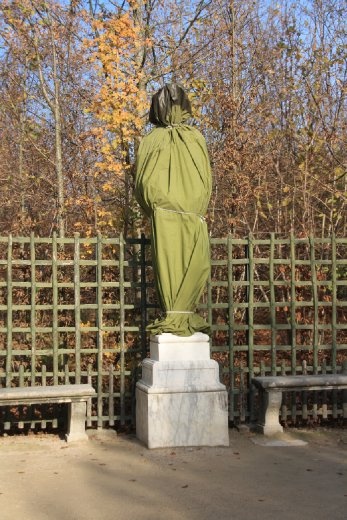
Our first stop was just outside Paris at Versailles to set the chateau bar. The palace interior is beautifully furnished with much of the original decor of Louis XIV, which was fun to see after seeing Mad King Ludwig's attempt at recreating Louis XIV's style (and insignia) at Linderhof in Germany.   The hall of mirrors is one of the most impressive rooms, meant to look like an endless hall of chandeliers.  Unfortunately, the palace grounds are much less impressive in the wintertime, with nothing in bloom, many of the flower beds dug up, and statues tarped over so that they resembled body bags more than bodies. We spent a couple hours exploring less than a quarter of the immense gardens. On one of the outer edges we found a peasant village Marie Antoinnette had constructed so she could visit and experience the peasant life style must be like. She even had her very own 2 story thatch hut constructed for authenticity. It was her escape from the palace without having to deal with things like actually being a peasant.

Best tip:
Book your visit to Versailles online ahead of time for about half the cost of buying it at the palace and you skip the ticket office's crazy line of confused tourists from around the world.


Honfleur  
Our next stop was the old port town of Honfleur. The city dated back to the 15th century and managed to pack 600 plus years of charm into its small wooden harbor - the subject of many budding impressionists' painting studies. The town is known for seafood, and when we pulled after a a quick lap around the harbor we'd found a local mid-range seafood restaurant. David started his culinary tour of France, blindly ordering the seafood platter without knowing the translations for any of the foods. One particular item he didn't recognize, he pointed out to the waitress and she translated it for us as "welk." Which, when our appetizer arrived, we found out were sea snails. The special seafood platter included cold langoustines, sea snails, tiny gooey clams, a couple shrimp, and oysters served on a bed of black seaweed leaves. Robin opted for the mussels with a gorgonzola sauce served in a small black pot, traditional for the region. Robin tried to count how many mussels were in the pot, but got lost somewhere after 100. It was a challenge for both of us.

We stayed north, aiming for the shores of Normandy. We quickly became seasoned road warriors, sleeping at trucker hotels and eating at road side chain restaurants since dining out in France gets so pricey. A few of our chain culinary highlights include: La Tonnelle, meals starting at $15 including all you can eat French cheeses, desserts, appetizers AND an all-you-can-drink taps of beer, cider and wine. The French customers exercised their self-control better than us. Another restaurant was The Buffalo Grill which has a country home feel, including a "kitchen counter" where a lady grills everyone order over an open flame in the middle of the restaurant. All the meals come with beans and a salad, and to keep it authentically home style, the waiter comes around every time your plate starts looking empty and gives you more food. And lastly, Le Poivre Rouge (The Red Pepper), which is only really notable for their cute logo and their lack of red pepper.  


D-Day Beaches
Our loop north brought us to the beaches of D-Day in Normandy. We scurried across the internet, downloading podcasts and articles trying to learn more about what we were seeing. We passed through empty beachtowns, full of would be tourist restaurants in the summertime. We were pretty accustomed to seeing beach cities, but it was weird because every beach city we passed through had some kind of memorial for WWII in it's center. Some cities had a tank, others had gun turrets lining the sidewalk. We stopped at Le Charleston, a faux American Diner with an ocean view overlooking the Nazi bunkers on the water while reading articles about the events of D-day. It was a very whacky and sobering experience over a lunch of pizza and beer. Our next stops were through the beaches where the D-day operation took place.
We hadn't realized that Canada had played a major role in the campaign on D-Day. We came across the Canadian memorial at Juno Beach first, since it's the furthest east, and were really taken by the gravity of being at the site.

As we continued along the coast, we tried to envision what the conditions must've been like during the war, imagining the sentiment in the occupied French towns along the coast, to the boats converging on the coast for the attack. All of it seemed awful.

Our guide to visiting the D-Day sites taught us a lot about D-day, including about the man-made harbor created by the British military after the beaches were captured by sinking giant pieces of cement roadway to create a breakwater to offload supplies. The sights were almost surreal, but looking out and seeing the harbor still intact made the war seem very present. The most striking were the cliffs of Pont du Hoc, our final destination for our D-Day tour.

Pont du Hoc was much farther than we expected and we had assumed we were lost several times before a re-assuring sign would pop-up telling us "Pointe du Hoc" was just down the road. Nothing our guidebooks told us prepared us for the craters that we saw. The cliffs were riddled with giant holes left from mortars that hit them, some a person's height deep. It leaves with a real sense of how horrifying the war must have been. This was also further reenforced when headed to Omaha beach and  saw the American cemetery sprawling almost endlessly from the visitor's center. It was row upon row of white marble crosses, interspersed with stars of David representing Jewish soldiers.
The visitor's center itself is an incredible telling of D-Day, and is one of the only informational centers/museums that's free to enter. We arrived just before closing, and drove the half hour back the next morning to see the exhibit in its entirety. 


When we'd decided to go to the beaches, it was more because we were in the area and felt it would be un-American not to, but we were surprised with how strongly we were affected by the sights. 


Our delightful hotel
Bayeux 
After a sobering day of sightseeing, we pulled into this small town not knowing what to expect and ended up at delightful little hotel that was a converted 18th century mansion run by a bubbly old French woman. Describing things as delightful make us feel like we're getting either boring or old, but the place was downright delightful. As we did some research online that night, we found the town is known for its large church, which we looked at completely, and the Bayeux tapestry, a few hundred foot long carpet with a story of a battle during the Reformation in 1066. At $10 to look at it, and having a very detailed color brochure in hand, we decided to pass in favor of finishing up our D-Day drive.


Mont St. Michel:
We were searching for must see sights in Northern France and quickly fell in love with the postcard perfect photos of Mont St. Michel. It's a tidal island a kilometer off the coast in Normandy, capped with a Disneyesque monastery. The island has had a fortification role for centuries, and has housed a monastery since the 8th century - although it had a brief stint as a prison in the 1800s. We found a perfect place to stay - a small B&B with a view of the island right out the window. We originally wanted to walk across the mud flats to the island in low tide, but after reading of the dangers of the tide that comes in at 12mph (faster than we run) and the definite need for a guide to attempt the walk, we opted for the causeway. Apparently, though, the causeway has slowly disrupted the water and has stopped Mont St. Michel from being an island. A problem that they're planning to solve with a new bridge soon.

The population of the island is a whopping 41, and even in this lowest of low seasons the population was probably squared with tourists.  We wove our way through the contents of a Japanese tour bus to the top of the island and wandered the grounds of the famous monastery. We considered stopping by a restaurant for one of Normandy's famous omelettes, but with a price tag of 30eur per we thought we'd wait and make our own less-famous version for a 10th of the price.

David's parents had visited the island a few years earlier and remembered another delicacy, pre-salted sheep.  The sheep feast on the salty mud flats around the island, which apparently results in a more savory meat. However, in low season we were out of luck in finding it. We found one farmhouse/restaurant that cheerily announced that they did have it in stock, but that was followed by the announcement that they weren't open.

Instead, we opted for drinking in the local flavors with a stop to a calvados maker. Calvados is a very potent alcohol made from apples. David, our trusty driver, was feeling tipsy after a single sip, so we cut our degustacion a bit short and bought an innocent bottle of apple juice for the road instead.


Best tip: Instead of paying for expensive parking at the island (which is pedestrian so you're really parking right next to it) and wondering if your car will float away at high tide, park at the last hotels on the mainland and walk in for a more scenic and economic approach to the island.


St. Mâlo and Dinard
The towns of St. Malo and Dinard sit on the shore of a small bay. St. Malo is an old heavily fortified city that has become a tourist destination for centuries. Doing this road trip in January was definitively outside tourist season, so many of the charming smaller towns we'd pass through would be almost wholly deserted and all you could do is window shop without an option to buy. The city was amazingly well maintained and updated, so there were many old store fronts with modern art galleries and high end apparel inside. After a few laps around the city, the cold got to us and we exited through the giant doors to the city and drove across the harbor to Dinard. We booked an AirBNB that we hadn't heard back from and so we pulled into a McDonald's to try to reach them. We didn't realize the host was from America, no less California. We got very nervous and excited at the prospect of hanging out with Americans for the first time on our trip. When we found the place, 5-stories up a steep staircase, we packed our hiking day pack with a night's change of clothes and settled in. 

Dinard was a quaint city, with a nice paved shoreline, a beachfront casino, and a handful of restaurants open for the off season. We chose a crêperie, a specialty of Brittany, to share a couple gallettes, a savory buckwheat version of a crêpe. David spotted an andouille sausage and egg gallette. As we've already seen on this road trip, David likes to try the menu items he doesn't know how to translate. When our dishes arrived, an unsavory scent arrived at the same time. Robin kept asking, "What is that smell?" When David offered her a taste of his gallette, she found out. The next day we told our American host about our gastro adventure and she told us that andouille sausage is just a pig intestine rolled up and sliced. Mmm, mmm.


After taking in the sights - and tastes - of the North, it was time to head South and into châteaux country! Read more in part 2.


Best Tips: 

McDonalds is your friend. If you're traveling through Europe and need an internet connection or affordable cup of coffee, look no further than Le Mac Do. Plus, it offers a great insight into French high school culture.

F1 Hotels. We had been using booking.com to search for affordable lodging on our trip. But from our AirBNB host in Paris, we learned about F1 hotels, part of a hotel chain owned by the same people that bring you Hotel Sofitel and the Pullman hotels. These hotels at the bottom of their portfolio offer clean and well appointed rooms at CRAZY low prices. And semi truck parking, too, if you're interested. Every hotel has the same layout and we found ourselves moving from one hotel to the next, but feeling like we were in the same place.

Best Laughs:
Brittany is known for their Camembert. Here's the camembert section in a local grocery store.


Wednesday, January 4, 2012

Eiffel in Louvre with Paris


PARIS

We know we're not the first to write about the city of lights, and we know you all know enough about the sights not to get into the details of our play by play of sightseeing, so to make everyone happy (including us) we're going through our visit bullet-style!


• Spent a week in a bachelor Studio in Paris with home cooking every night on a tiny two burner hotplate  
• Had our unopened New Years Eve champagne taken and thrown away by the police on the Champs Elysees. When we asked why they did it, they literally threw their hands up and  said  "It's already done, what do you want me to do?"

• Bought boot-leg champagne for the lack of a midnight celebration at the Eiffel Tower (in crowd control efforts, Paris did away with their New Years eve celebrations. There were no fireworks, light show, or countdown for New Years)

• Spent 4 hours after midnight trying to get home on the Metro. The Metro shut down two hours into our adventure.

• Bought a 4 day museum pass. Crammed in visits to the Louvre, Orangerie, Orsay, Decorative Arts Museum, Pompidou and climbed the Arc de Triumph in our first two days

• Resold the passes to friendly American teens at the Louvre on our second day with and used the money to see Versailles for free

• Toured Montmartre and saw the Moulin Rouge and the cafe from the movie Amelie

• Churched around to see the giant nativity scene at Notre Dame and the Stained Glass of St. Chappelle


• Got engaged at Montmartre on a late-night stroll while they took down the Christmas market at Sacre Coeur

• Robin said yes

• Fun first day of engagement pictures at Eiffel Tower (sadly, files not found)


Best Eats: 
Hot Chocolate at Angelina's. Pretty much a bar of African chocolate, melted into a cup and topped with whipped cream and an 8 Euro tab

Unbeknownst to Robin, engagement dinner at [INSTERT RESTAURANT NAME] Really good tomato provencal and original art nouveau decor.

Butter croissants and baguettes, 1-2x daily.


Best Laughs:
Coming across the American and British section of our local supermarket: Peanut butter, Hershey's syrup, popcorn, brownie mix, and Fluff. That novelty marshmallow spread apparently has an international reputation as an American staple.